
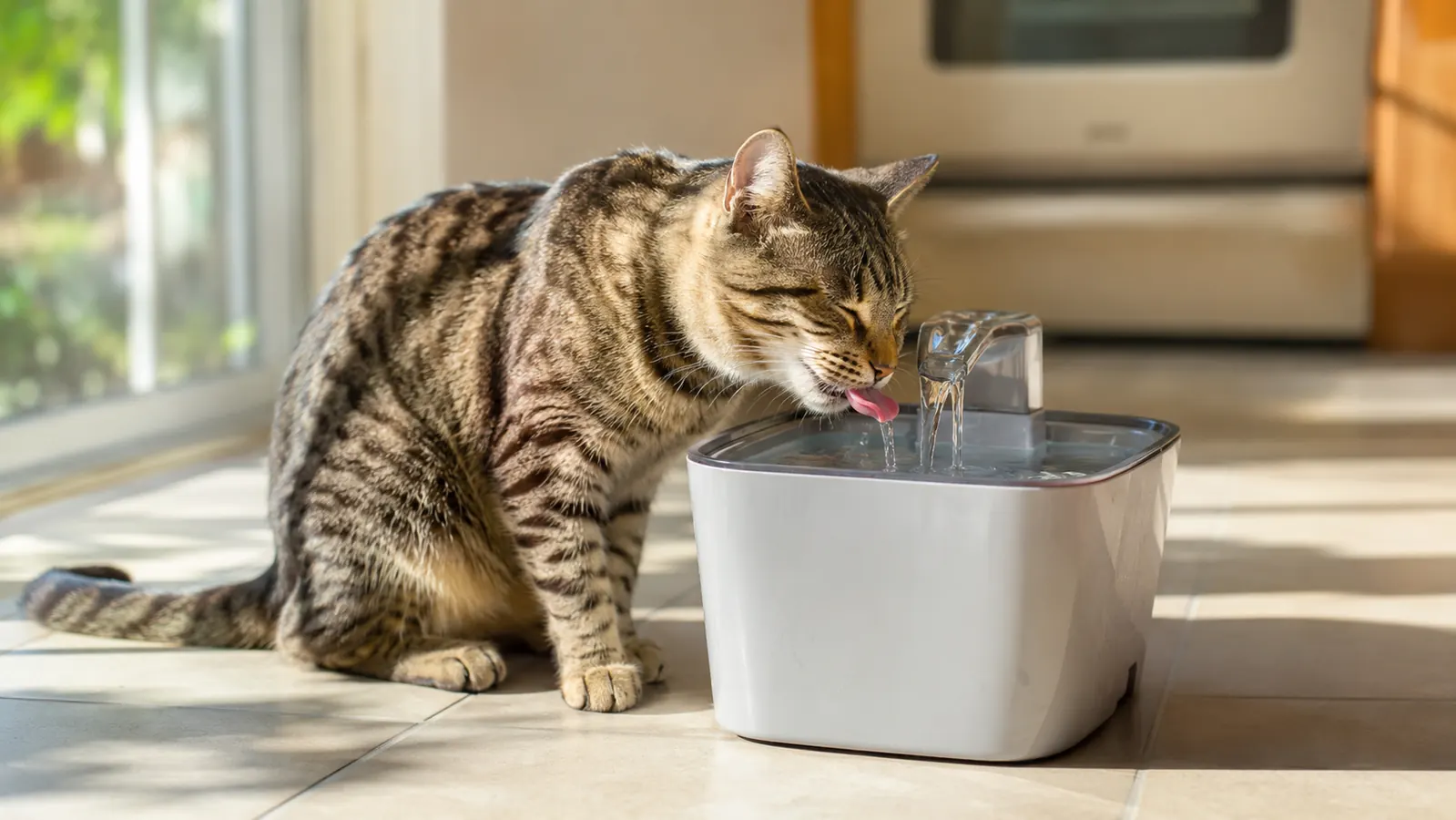
Cats evolved in North African deserts. Their ancestors got most of their water from prey tissue, not standing pools, which means your cat's thirst drive is genuinely weak compared to a dog's. An indoor cat eating dry kibble every day is working against biology every single time you set out a still bowl of water and walk away. The result is chronic, low-grade dehydration that most owners never catch until the vet mentions it at an annual checkup or, worse, after a urinary blockage.
We have been down that road ourselves. After one of our cats, a nine-year-old tabby named Biscuit, came back from the vet with a UTI and a note about 'concentrated urine,' we started paying real attention to how much she actually drank each day. The answer was: not enough. This guide covers exactly what we changed, step by step, and how the ORSDA Cat Water Fountain (the stainless steel 2L model, ASIN B08D8JKPLL, currently rated 4.2 stars across more than 15,000 reviews) became the single upgrade that made the biggest difference.
If your cat walks past the water bowl without stopping, this is worth checking out.
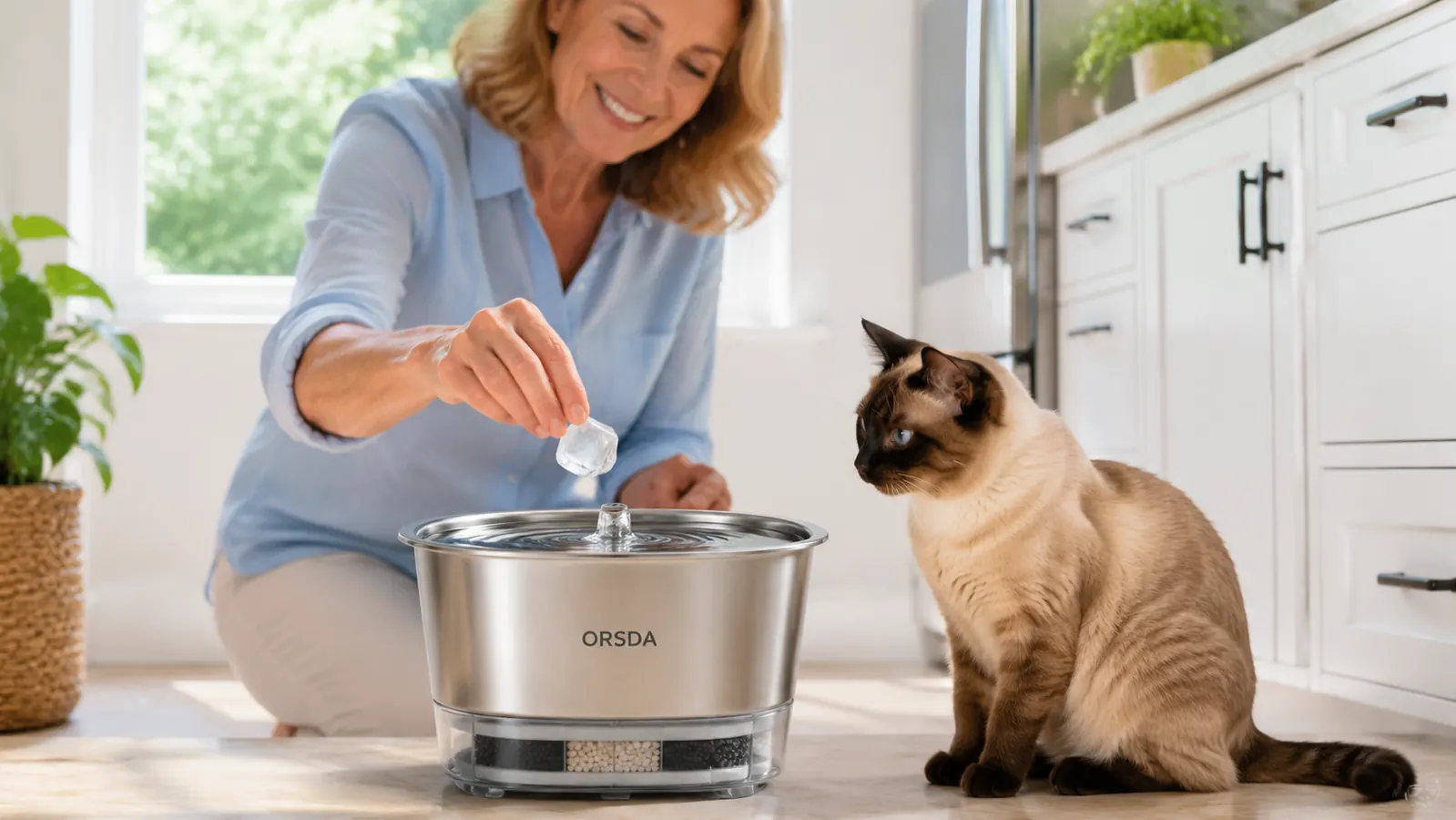
The ORSDA stainless steel cat fountain uses a whisper-quiet pump to keep water circulating continuously. Most cats that ignore still bowls start drinking from a fountain within the first day or two. It is one of the lowest-effort interventions for a notoriously hard problem.
Amazon Check Today's Price on Amazon →Step 1: Calculate Your Cat's Actual Daily Water Target
Before you can tell whether your cat is drinking enough, you need a number to aim for. The widely cited baseline from feline nutritionists is roughly 3.5 to 4.5 fluid ounces (100 to 135 mL) of water per 5 pounds of body weight per day. So a 10-pound cat needs somewhere between 7 and 9 fluid ounces daily, all sources combined. If your cat eats wet food, you can subtract a meaningful portion of that because a 3-ounce can of wet food typically delivers about 2.5 ounces of moisture. If they eat dry kibble exclusively, almost none of that moisture is coming from food.
Weigh your cat on a bathroom scale (pick them up, weigh yourself holding them, then subtract). Write that number down. Multiply by 0.7 for a rough daily fluid-ounce target. That is your baseline. Cats on all-dry diets almost never hit it drinking from a still bowl, because still water does not trigger the same drinking response in cats that moving water does. Keep that number in mind as you go through the rest of these steps.
Step 2: Know the Early Signs of Dehydration
By the time a cat is visibly lethargic or has sunken eyes, dehydration is well advanced. The signs you want to catch earlier are subtler. The skin-tent test is the most reliable: gently pinch the skin at the back of your cat's neck, lift it slightly, and release. In a well-hydrated cat, the skin snaps back flat in under a second. If it slowly slides back over two or three seconds, your cat is likely behind on fluids. A second check is gum tackiness. Run a clean finger across your cat's upper gum. It should feel slick. If it drags or feels slightly sticky, that is another dehydration flag.
Urine color is harder to track in a litter box, but it is worth noting. Healthy cat urine is pale yellow. Dark amber urine means concentrated output, which is the body conserving water because it is not getting enough. If you see your cat straining in the box or producing very small, dark deposits, call your vet. That moves past home management into medical territory fast.
Step 3: Audit Your Current Water Setup
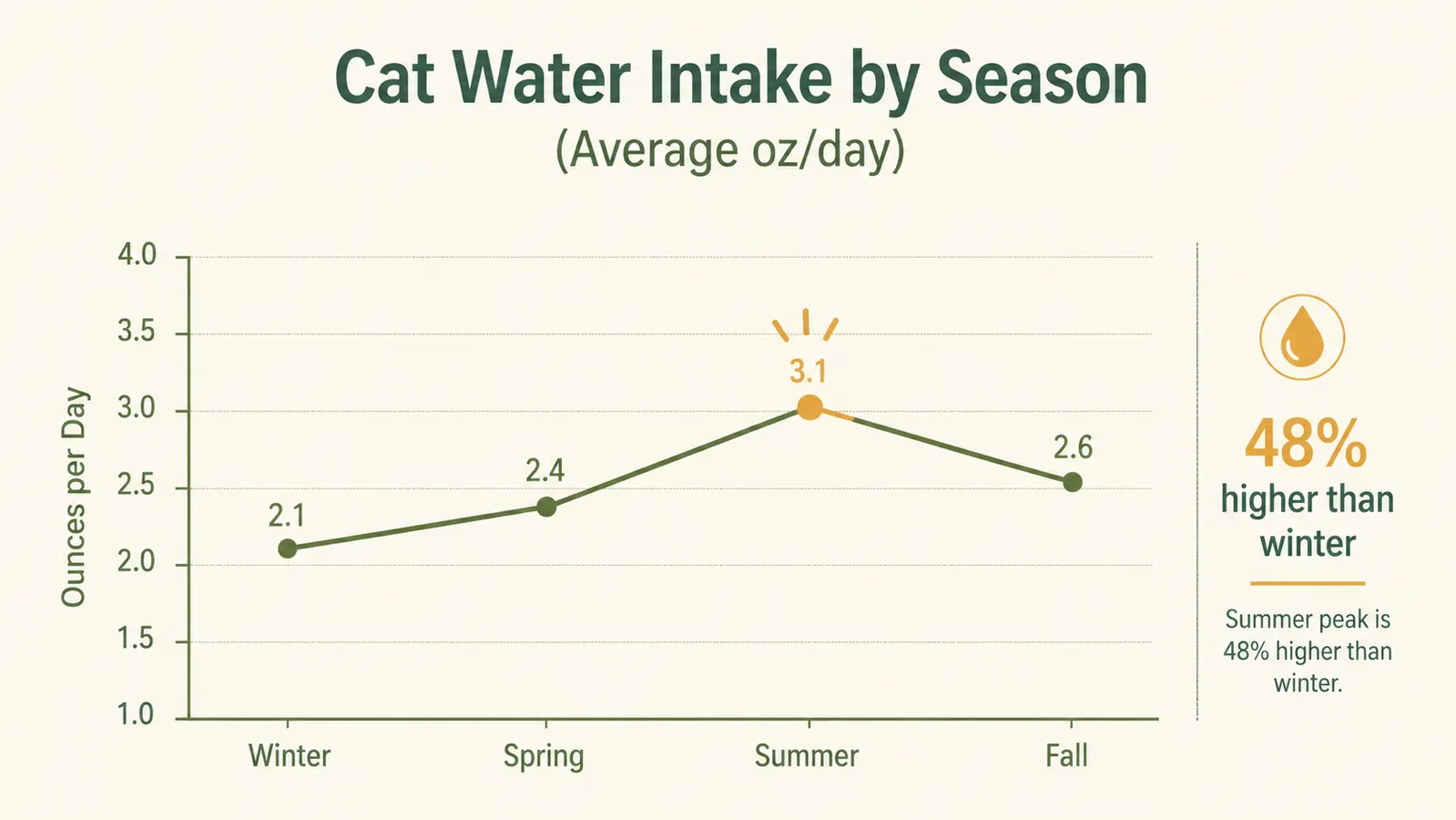
Most households have a single water bowl in one location. That is almost always the wrong setup for a cat. Cats in the wild drink from multiple water sources spread across a territory. A single bowl in the corner of the kitchen, placed next to the food bowl, is already fighting two natural instincts: cats prefer their water source away from their food source (prey contamination is a real concern in the wild) and they respond poorly to still, uncirculated water that picks up food smells, dust, and bacteria within hours.
Walk your home and note where your cat spends most of their time. That is where an additional water source belongs. If they sleep on the bedroom floor, a second water option near there is not excessive. Also note what material your current bowl is made from. Plastic bowls develop micro-scratches that harbor biofilm, which cats can smell and refuse to drink from even when the bowl looks clean. Stainless steel and ceramic resist this far better.
Step 4: Switch to Moving Water
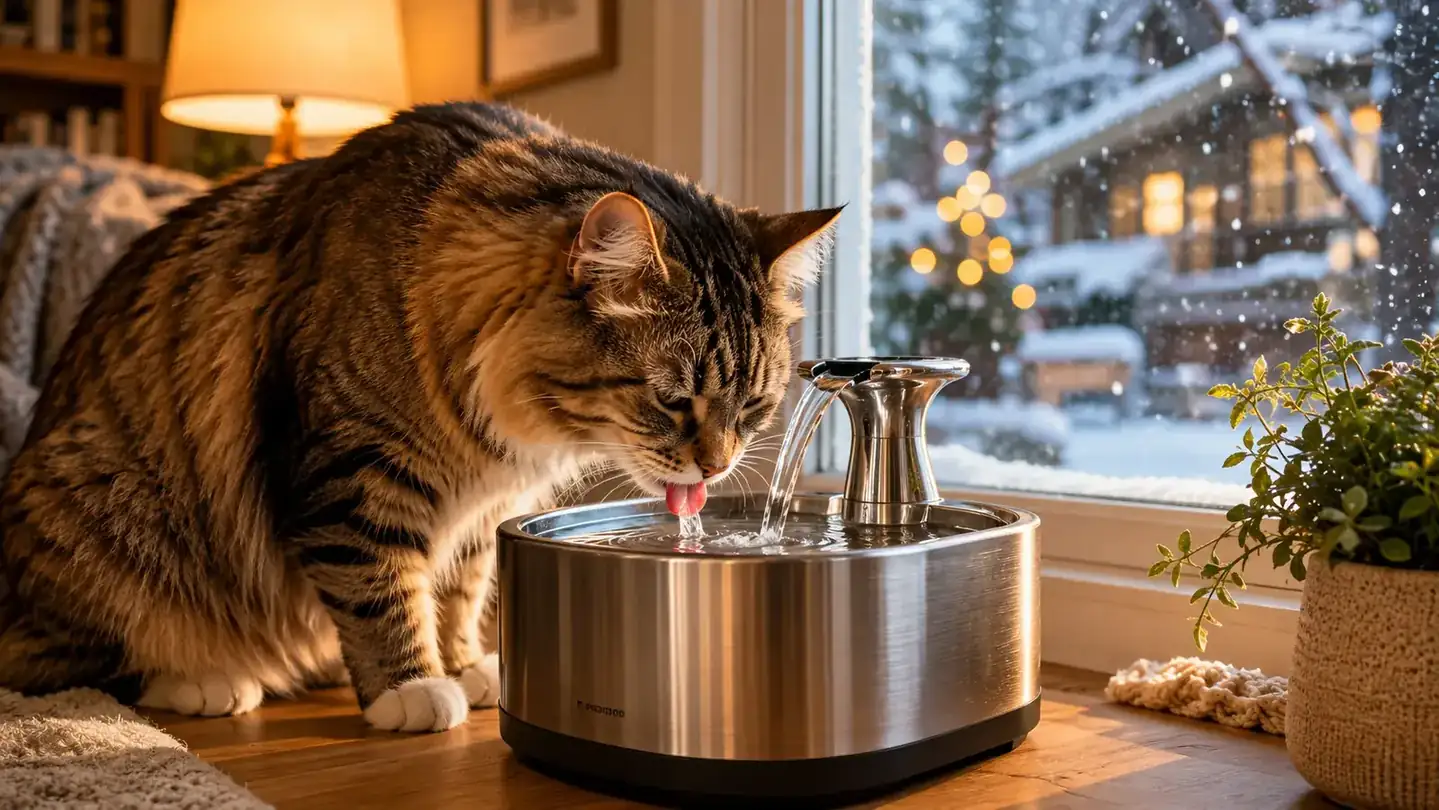
This is where the biggest change happens for most cats. Flowing water is cooler than standing water, stays aerated, and produces a visual and audio cue that cats are genuinely drawn to. If you have ever watched your cat beg to drink from a running faucet, you have already seen the instinct in action. A fountain replicates that continuously, without you having to stand at the sink.
We switched Biscuit to the ORSDA stainless steel 2L fountain and tracked her drinking for two weeks after the switch. In the first three days she was cautious, sniffing around it and occasionally pawing the flow. By day four she was drinking from it every morning. By the end of week two she had completely abandoned the ceramic bowl we left out as a backup. The stainless bowl portion is a key detail: unlike plastic fountains, it does not develop the biofilm smell that sensitive cats reject. The pump is also notably quiet, which matters if you keep the fountain in a bedroom or light-sleeping area.
By day four she was drinking from the fountain every morning. By the end of week two, she had completely abandoned the ceramic backup bowl we left out.
Step 5: Set a Cleaning and Filter Schedule
A fountain is only better than a bowl if you keep it clean. The ORSDA unit takes the stainless bowl and top reservoir off for cleaning, which makes the process faster than fountains with integrated plastic basins. We rinse and wipe the bowl every three days and do a full disassembly with dish soap once a week. The pump impeller benefits from a monthly soak in a small cup of white vinegar to dissolve mineral deposits, especially if you have hard tap water. The carbon filter that comes with the ORSDA should be replaced every four to six weeks depending on how many cats are drinking from it.
Put the filter replacement date on your phone calendar the day you set it up. It is the most commonly skipped maintenance step and it is also the step that determines whether the fountain stays bacteria-free or quietly builds up a biofilm that makes your cat start avoiding it again. A three-pack of replacement filters for the ORSDA runs a few dollars and covers three months. Order them the same day you order the fountain and you will not miss a cycle.
What Else Helps
A fountain handles the water-source problem but a few supporting habits make a meaningful difference on top of it. If your cat eats exclusively dry food, introducing even one meal of wet food per day adds roughly 2 ounces of moisture without any bowl-fighting involved. That can meaningfully close the gap for smaller cats, bringing them from chronically behind to just within range. For picky cats who reject wet food texture, a tablespoon of low-sodium chicken broth added to dry kibble achieves something similar.
Placement matters more than most people expect. We moved Biscuit's fountain from the corner near her food bowl to the opposite side of the kitchen and her drinking frequency went up noticeably in the first week. The separate-from-food instinct is real. If counter space allows, a second water source in a different room is worth trying for cats that still drink less than you would expect even after the fountain switch. Some cats just want options, and two sources beats one every time.
Finally, refill the fountain with fresh water daily even though it circulates and filters. The circulating pump aerates and filters but it does not replace evaporation loss, and a fountain running low on water starts to hum louder as the pump works harder. Keeping the level topped off extends pump life and keeps the flow quiet enough that sensitive cats stay engaged with it instead of startled by it.
For a deeper look at how the ORSDA fountain performs day to day across five months of use, read our long-term review at ORSDA Cat Water Fountain Review: Five Months of Daily Use. If you are still weighing whether a fountain is worth it over a nice ceramic bowl, we cover that comparison directly in Cat Water Fountain vs Regular Bowl: The Honest Comparison Cat Owners Need.
Ready to stop guessing whether your cat drank enough today?
The ORSDA stainless steel fountain keeps water moving, filtered, and fresh around the clock. Over 15,000 reviewers and a 4.2-star rating. The stainless construction means no plastic taste or biofilm smell that puts cats off. Worth every dollar if you have a dry-food cat or one who has ever had a UTI.
Amazon Check Today's Price on Amazon →