
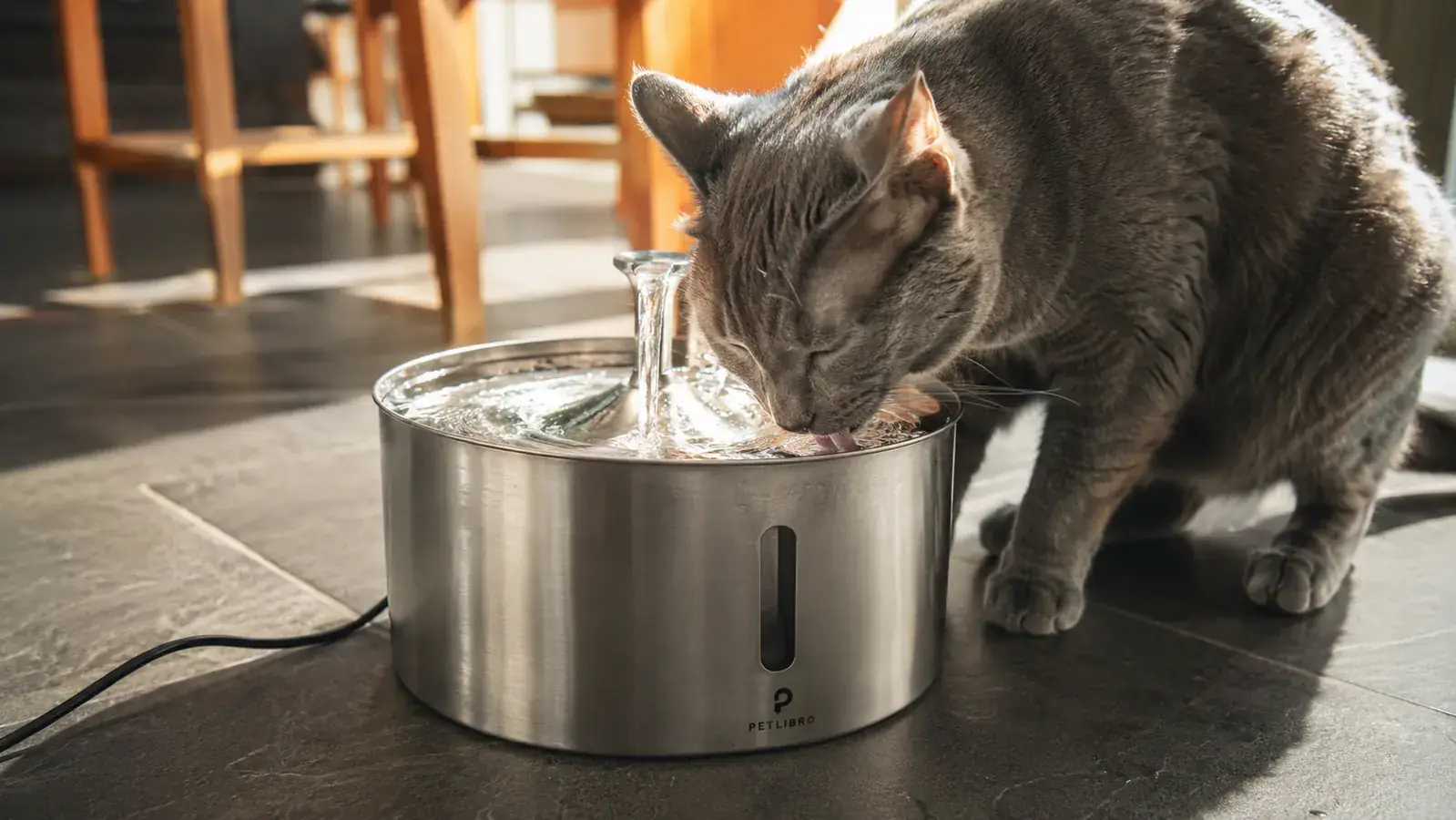
Our 7-year-old tabby, Mango, was drinking maybe two or three sips from her ceramic bowl each morning, then ignoring it for the rest of the day. Our vet flagged her urine as too concentrated at her annual checkup and said the single biggest thing we could do was get more water into her. We had tried wider bowls, filtered tap water, even adding a splash of low-sodium broth. Nothing moved the needle. So in January we set up the ORSDA Cat Water Fountain Stainless Steel 2L on the kitchen floor, mostly as a last resort before we started mixing wet food into every meal. Five months later, the fountain is still running on the same pump, Mango drinks from it multiple times a day, and our second cat Hazel has claimed the basin as her preferred drinking spot. This is everything we noticed along the way.
The Quick Verdict
A genuinely quiet, easy-to-clean stainless fountain that gets cats drinking more. Minor issues with filter longevity and the pump collar design keep it from a perfect score, but at this price point it is hard to beat.
Amazon Check Today's Price →If your cat ignores still water, this is the fix that costs less than a vet co-pay.
The ORSDA stainless model runs quietly, holds 2 liters, and takes about 10 minutes to clean. Over 15,000 Amazon buyers have reviewed it. Check today's price below.
Amazon Check Today's Price on Amazon →How We've Used It
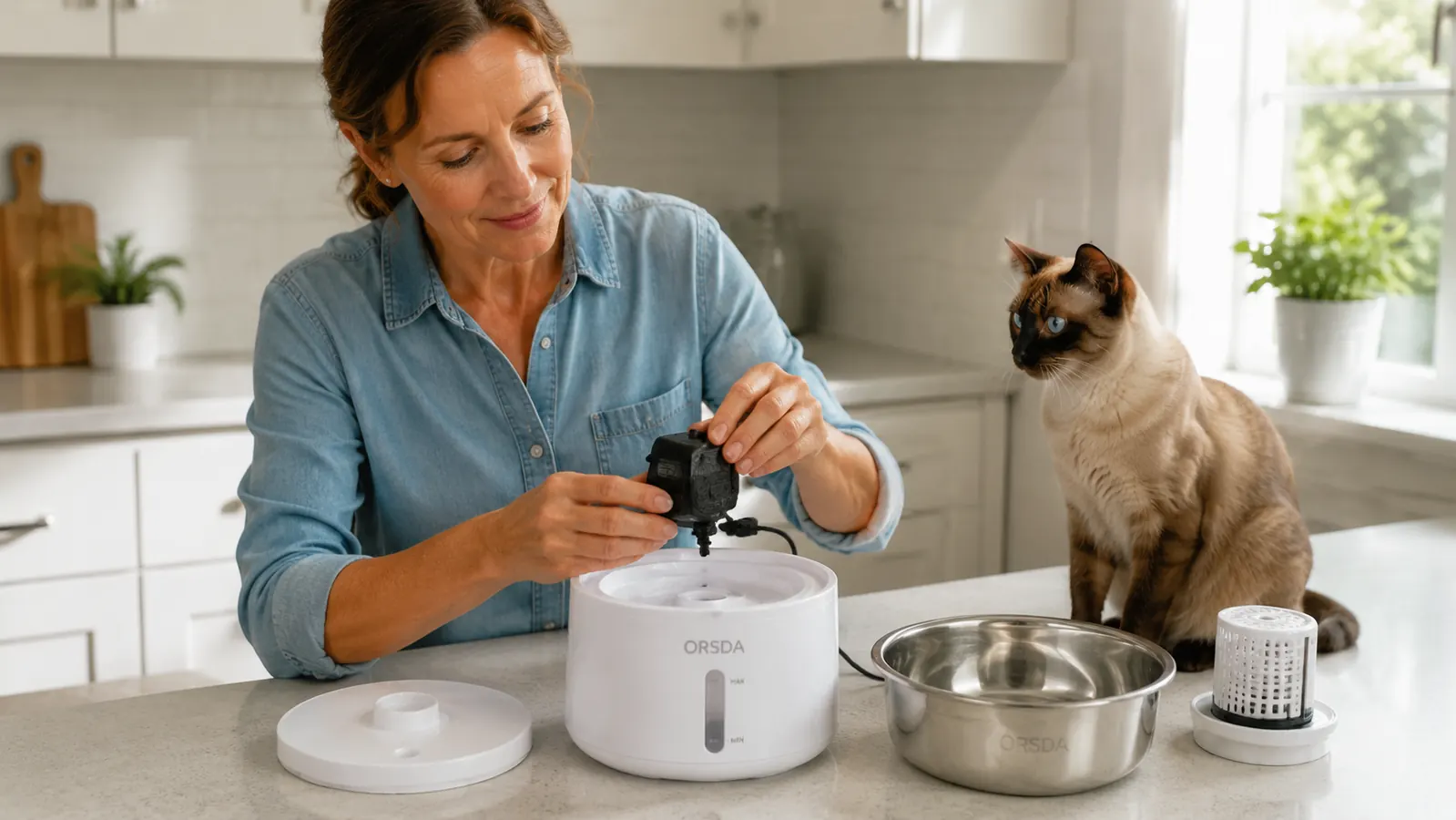
We set the fountain on the kitchen floor, about three feet from where the old ceramic bowl sat. The ORSDA comes with two filter cartridges and a small pump that sits inside the basin. Setup took us under 15 minutes, including rinsing the stainless bowl, loading the carbon filter into the pump housing, and filling the 2L reservoir. The gentle stream starts the moment you plug it in. Our cats were suspicious for the first two days and kept circling the thing without drinking. By day three, Mango was drinking from the stream. By day five, Hazel was drinking from the basin. By week two, both had abandoned the old bowl entirely.
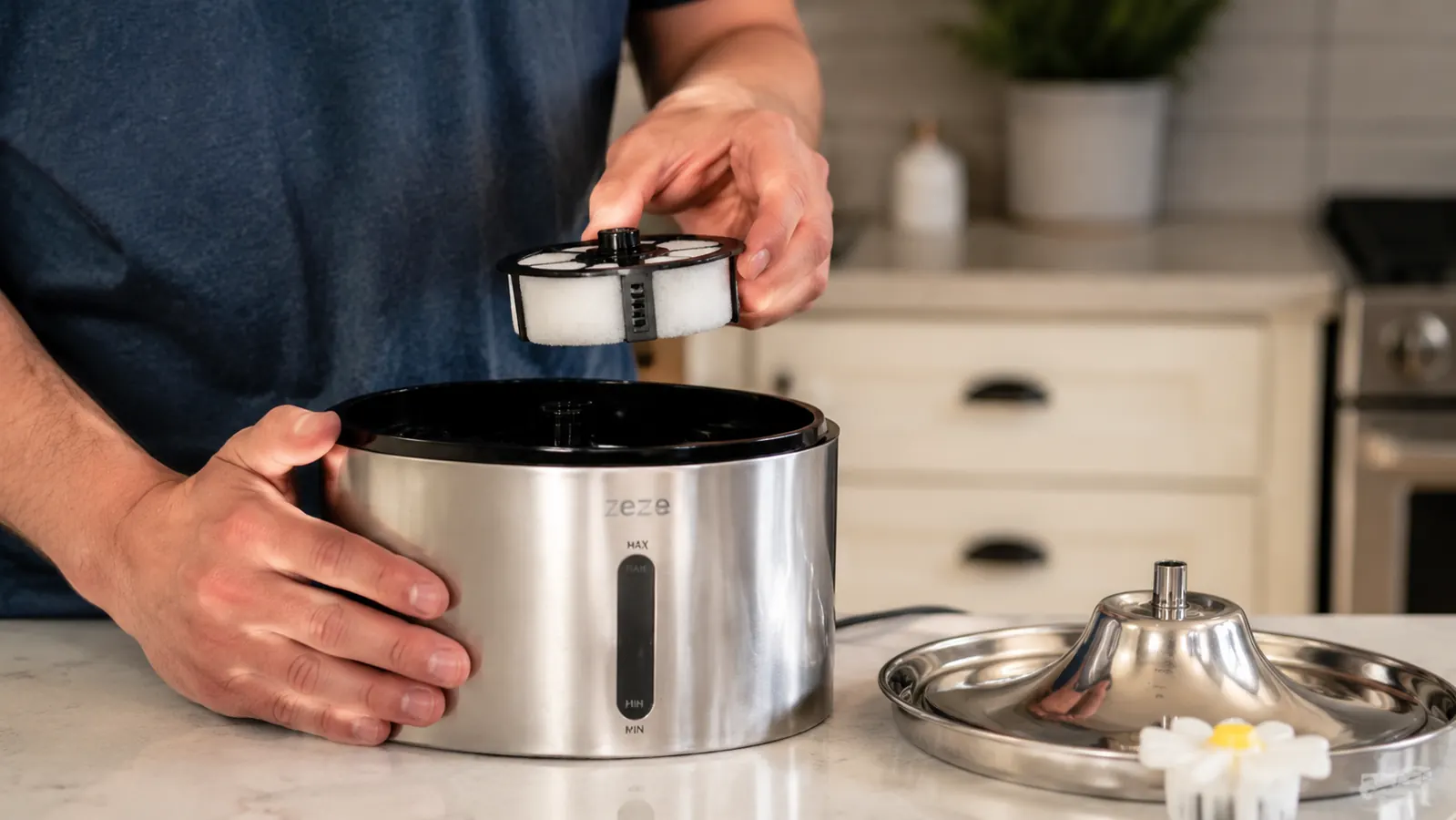
We run it 24 hours a day, seven days a week. We do a quick top-off every two to three days to keep the water level above the pump intake, and we do a full disassembly cleaning about once a week: the stainless bowl rinses clean in about two minutes, the pump filter gets a gentle scrub under the faucet, and the carbon filter gets replaced every 30 days. The whole cleaning process takes 10 to 12 minutes. That is genuinely less time than washing dishes.
One note on the water level: if it drops too low, the pump will start making a slight rattling sound. It is easy to miss if you are not listening for it. We added a phone reminder to top off every other day, which fixed the issue completely. If your cats drink heavily, you may need to refill daily.
Stainless Steel vs Plastic: Does the Material Actually Matter
This was the question we had when we were shopping. Almost every budget fountain is plastic, and plastic fountains get the job done. But plastic develops micro-scratches over time, and those scratches harbor bacteria and biofilm that you cannot fully scrub away. Our previous plastic fountain, after about four months, had a persistent slick feeling on the interior wall even right after cleaning. The ORSDA's stainless bowl does not do that. After five months of daily use, the inside of that bowl still comes clean with a quick rinse. That alone made the switch worth it for us.
There is a secondary benefit that matters if you have a cat prone to chin acne. Feline chin acne is often linked to plastic food and water dishes because the porous surface traps bacteria that transfer to the cat's chin. Mango had mild recurring chin bumps with her plastic fountain. They cleared up within about six weeks of switching to the ORSDA stainless model. We cannot say it is a guaranteed fix, but the correlation was clear enough that we are not going back.
After five months of daily use, the inside of that stainless bowl still comes clean with a quick rinse. Our old plastic fountain never came fully clean after month four.
Noise at 2am: The Real Test for Any Cat Fountain
We keep the fountain in the kitchen, which is one room away from the bedroom. We have tested it at night multiple times, listening specifically for pump noise. At full water level, the ORSDA is genuinely silent from 10 feet away. You can hear a very soft water trickling sound if you are right next to it, which is actually soothing. There is no motor hum, no grinding, no vibration buzz against the floor. When the water gets low and the pump starts to labor, it produces a quiet intermittent clicking. That is your reminder to top off, not a product flaw.
We have owned two other cat fountains over the years. One had a pump that developed a persistent whirring noise around month three. The other vibrated against its base and buzzed on hardwood floors. The ORSDA has not done either of those things in five months. We attribute that partly to the pump quality and partly to the heavier stainless basin, which sits more stably than a lightweight plastic shell.
Filter Life and Running Costs
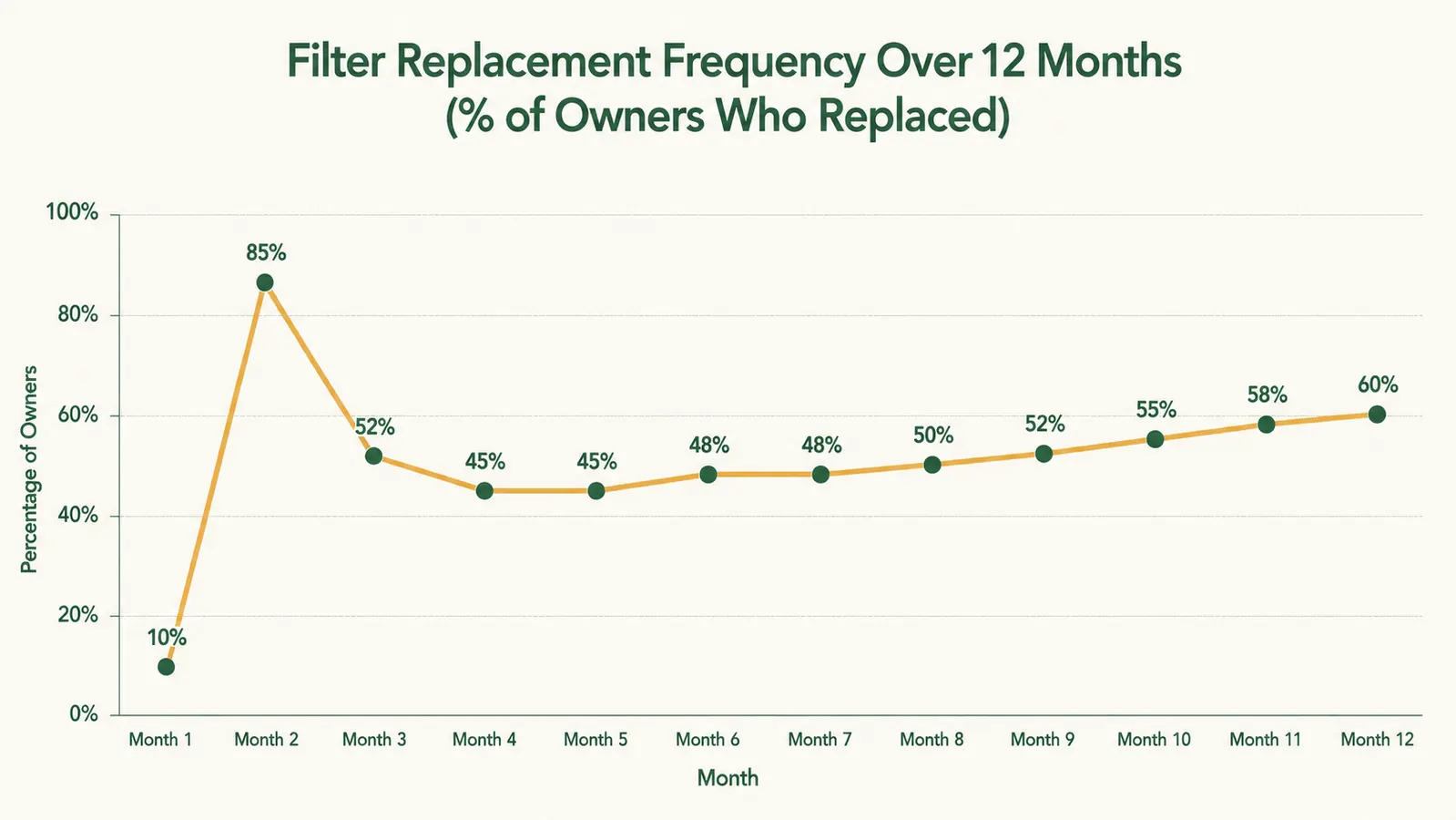
The fountain ships with two carbon filter cartridges. ORSDA recommends replacing the filter every 30 days for best water quality. Replacement filters are sold in packs of four to six on Amazon and cost about six to eight dollars per pack, which works out to roughly one to two dollars per month. That is an almost negligible ongoing cost. We have stuck to the 30-day schedule and the water has always smelled clean when we change it.
One minor gripe: the filter fits snugly inside the pump housing, but the pump housing itself has a collar that screws on to hold the filter in place. After repeated removal and reinstallation, the collar started feeling slightly less secure around month four. It has not caused a problem yet, but it is something to watch. If you notice the pump making more noise than usual, check whether the collar has backed off slightly. A quarter-turn clockwise usually solves it.
Performance Over Five Months: What Changed and What Held Up
Month one was all about cat acceptance. Both cats took a few days to commit, which is normal. Months two through four were the smoothest stretch: no noise, no leaks, clean water every day, both cats drinking consistently. Month five brought the one real issue we noticed. A very faint mineral deposit ring appeared just at the waterline inside the stainless bowl, similar to what you see in a kettle after several months. White vinegar soak for 20 minutes dissolved it completely and it has not returned. If you have hard tap water, do this monthly and you will never see it build up at all.
The pump itself has shown no signs of slowing down. The stream height and flow rate are identical to what they were on day one. We did not need to descale or replace any part of the pump in five months. Given that this is running continuously, 24 hours a day, that is a solid track record for a budget fountain.
What I Liked
- Stainless steel bowl resists biofilm and bacterial buildup far better than plastic
- Genuinely quiet motor, silent from a room away at normal water levels
- 2L capacity handles two cats for 2 to 3 days between refills
- Disassembly and weekly cleaning takes under 12 minutes
- Filter replacements cost roughly one to two dollars per month
- Both cats increased drinking frequency within the first week
- Heavier basin stays in place on hardwood and tile
Where It Falls Short
- Pump collar loosens slightly over repeated cleaning cycles, requires a periodic check
- Water level needs monitoring daily in a two-cat household to avoid pump rattle
- Hard water users will see mineral deposits at the waterline without a monthly vinegar soak
- Stream height is fixed and cannot be adjusted
Who This Is For
The ORSDA stainless fountain is the right pick if your cat is a reluctant drinker, if your vet has flagged hydration as a concern, or if you have had recurring feline UTIs or kidney issues. It also makes sense if you currently have a plastic fountain that is getting grimy between cleanings. The stainless surface genuinely changes how clean the water stays and how little scrubbing you need to do. If you have two cats and do not mind topping off the water every day or two, the 2L size is workable. For three or more cats, you would want to look at a larger unit.
If you are on the fence about whether a fountain will actually change your cat's drinking behavior, the honest answer is: most cats do respond to moving water. The instinct to prefer flowing water over still water is deeply hardwired in cats, who evolved to treat still water in the wild as a potential contamination risk. A fountain addresses that instinct directly. We also go deeper on the science behind this in our article on 10 reasons cats prefer flowing water over a still bowl.
Who Should Skip It
If you have three or more cats, the 2L capacity will feel small. You will be topping it off once or twice a day, which defeats some of the convenience. A larger fountain would serve a busy multi-cat home better. If you have a cat who is particularly rough with objects or who loves to bat things around, the low-profile ORSDA design can be pushed around on slick floors more easily than a heavier ceramic fountain. And if you are hoping to set it up and forget it entirely, the monthly filter change and weekly cleaning are real requirements. They are easy, but they are not optional.
For those evaluating whether a fountain is even necessary versus upgrading an existing bowl setup, our full breakdown of a cat water fountain versus a ceramic bowl covers the hydration and bacterial buildup differences in more detail.
Your cat is probably drinking less than they should. This fixes it affordably.
The ORSDA stainless fountain has over 15,000 Amazon reviews, runs quietly around the clock, and takes less time to clean than a coffee mug. If your cat has ever had a UTI, kidney issue, or just seems uninterested in their water bowl, this is the most affordable change you can make.
Amazon Check Today's Price on Amazon →