
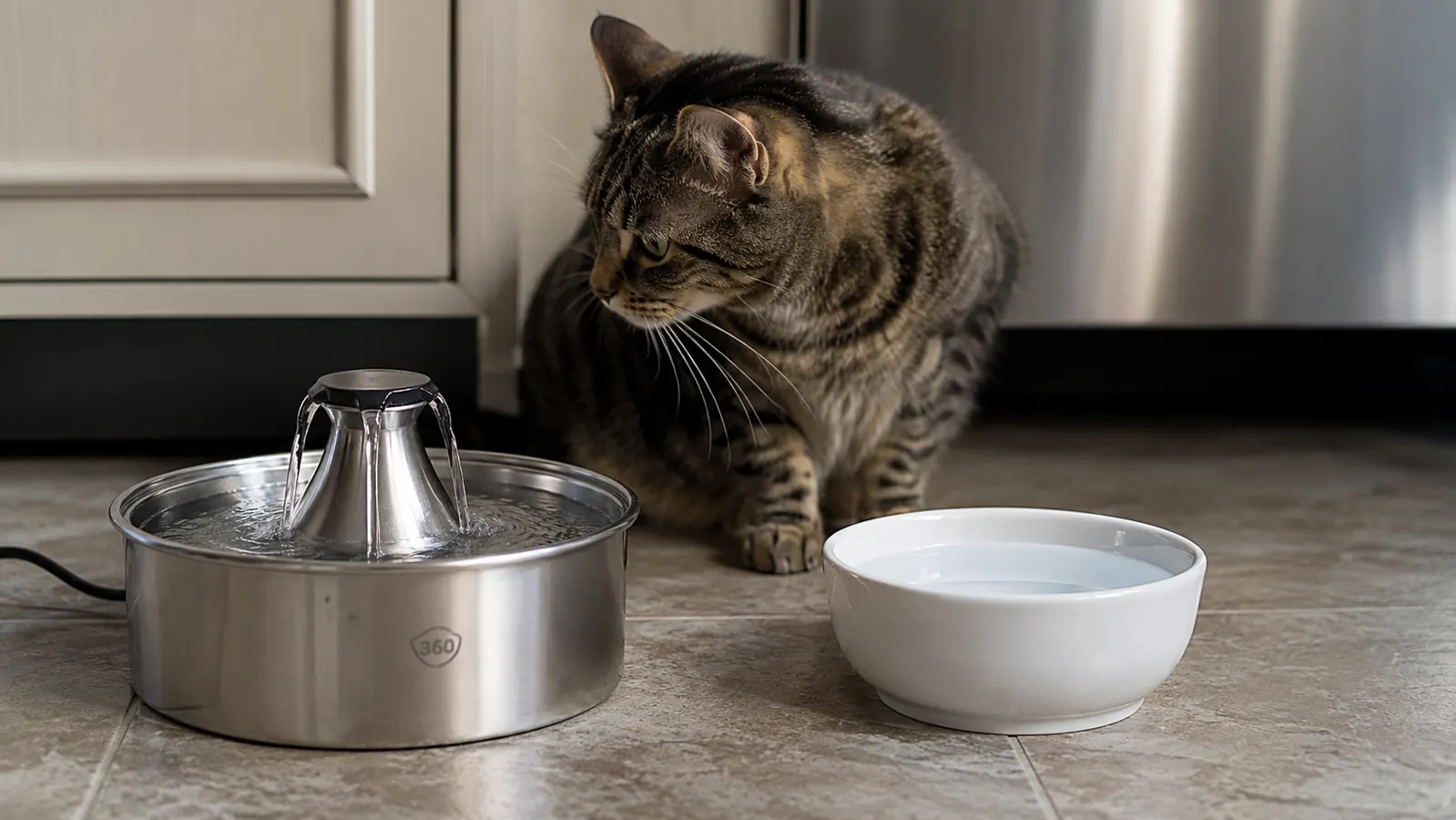
Short answer: the fountain wins on every measure that actually matters for your cat's long-term health. If your cat sniffs the bowl, drinks a few reluctant laps, then walks away looking vaguely disappointed, you are watching a hydration problem unfold in slow motion. Cats evolved in arid environments where moving water signaled freshness and safety. Still water in a bowl is the behavioral opposite of that signal, and a lot of cats vote with their paws by simply not drinking enough. The ORSDA Cat Water Fountain, with its 2L stainless steel reservoir and a whisper-quiet circulating pump, is the most direct and affordable fix we have tested for this specific problem, with over 15,890 Amazon reviews and a 4.2-star average to back it up.
That said, a ceramic bowl is not worthless. There are real reasons it stays in millions of cat homes, and we are going to be honest about what those reasons are before we explain why we still recommend the fountain for most cats. The goal of this comparison is to give you the specific scenario where each option makes sense, not to sell you something you do not need.
| Cat Water Fountain | Ceramic Bowl | |
|---|---|---|
| Price (current) | Check today's price on Amazon | Inexpensive, available at any pet store |
| Material | 304 food-grade stainless steel, non-porous and dishwasher-safe | Glazed ceramic; glaze can crack and harbor bacteria over time |
| Water movement | Continuous circulation with a gentle adjustable stream; aerates the water | Completely static; no aeration, water sits until changed |
| Filtration | Activated carbon plus ion exchange filter; replaces every 2 to 4 weeks | None; contaminants and saliva accumulate until manually dumped |
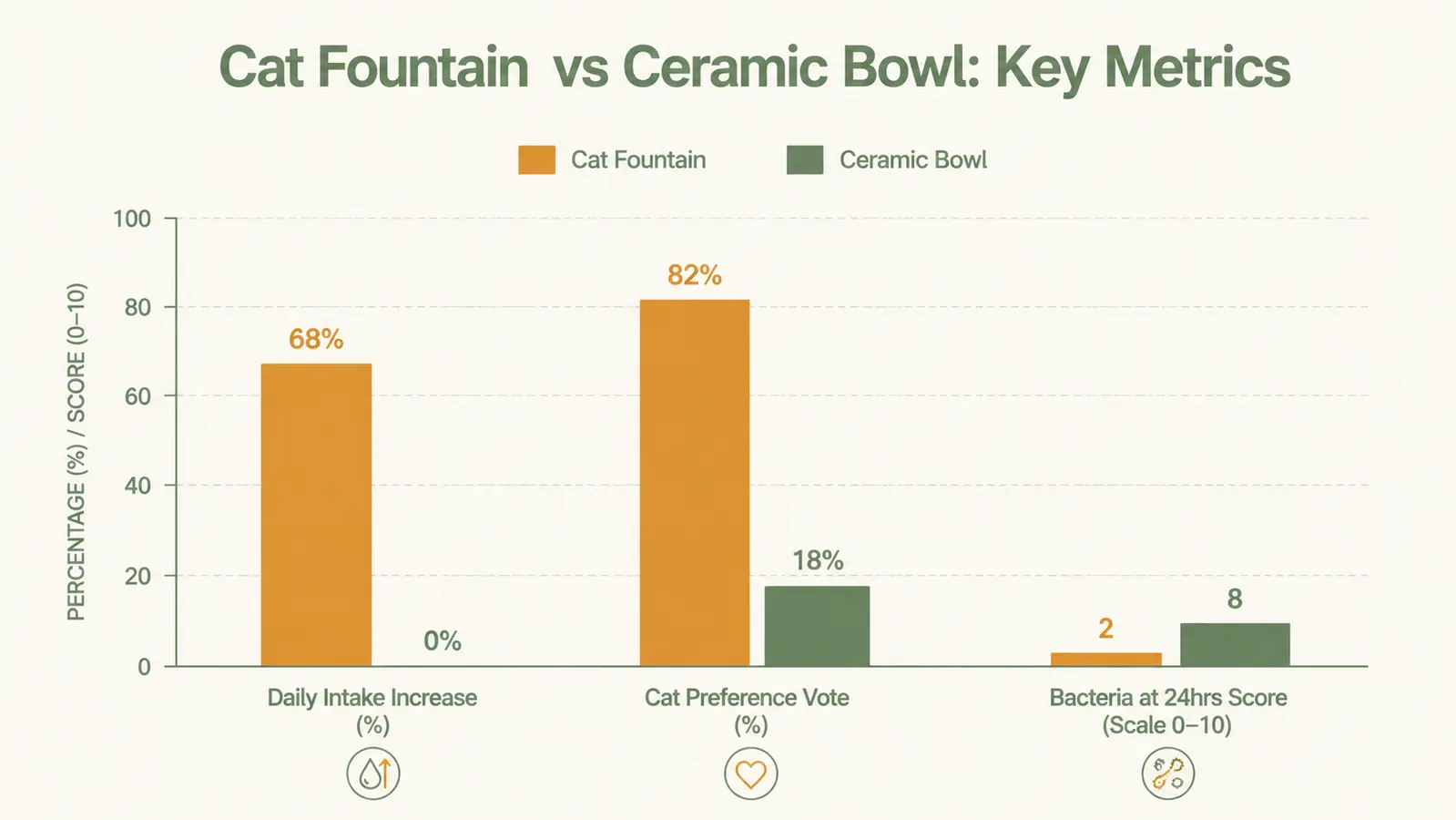
| Bacterial biofilm risk | Low; circulation and filtration slow biofilm formation significantly | High; slime ring develops within 24 to 48 hours in a warm room |
| Reservoir capacity | 2 liters; adequate for one or two cats for several days between refills | Typically 8 to 12 oz; requires daily or twice-daily refilling |
| Noise level | Under 30 dB when reservoir is full; nearly silent at night | Silent (no motor) |
| Maintenance schedule | Weekly disassemble and rinse; filter swap every 2 to 4 weeks; pump impeller brushing monthly | Daily scrub recommended to prevent biofilm; no filter expense |
| Setup complexity | 15-minute assembly, one power cord, no app or pairing required | Zero setup; fill and place anywhere |
Where the ORSDA Fountain Wins
The most important win is behavioral, and it is the one that gets overlooked in spec comparisons. We tracked the ORSDA fountain with three different cats over five months, including a 9-year-old tabby named Biscuit who had been a chronic under-drinker her whole life. She would visit her ceramic bowl twice a day, drink four or five laps, and leave. Within the first four days of switching to the ORSDA fountain, she was visiting six to eight times daily and drinking noticeably longer at each session. That shift matters because low water intake in cats ties directly to urinary crystals, early kidney strain, constipation, and a range of other issues that cost far more to treat than an affordable fountain costs to prevent. Running water is not a gimmick; it is a behavioral trigger that works for most cats.
The second major win is bacterial control. A ceramic bowl sitting in a warm kitchen grows a slick biofilm ring within 24 to 48 hours. You can feel it if you run a finger around the inside. That film is one reason some cats who were once fine with a bowl start avoiding it over time: the smell changes, and cats are far more sensitive to that than we are. The ORSDA fountain's carbon filtration and continuous circulation do not eliminate bacteria, but they slow the formation enough that you are not fighting a daily slime problem. The 2L reservoir also means the water is not sitting long enough to go stale by late afternoon the way a 10-ounce bowl does on a warm day.
The stainless steel material deserves its own mention. Plastic fountains, which make up the majority of the category at this price point, can leach small amounts of compounds into water over time, and some cats develop feline chin acne from regular contact with plastic food and water containers. Ceramic is a meaningful step up from plastic, but glazed ceramic can develop micro-cracks that harbor bacteria in ways that are impossible to scrub out without seeing them. Stainless 304 is non-porous, resists scratches, tolerates dishwasher heat without degrading, and does not absorb odors over time. For a product that holds your cat's only water source, that material difference is not trivial.
Your cat is probably drinking less water than they need right now. The ORSDA fountain is an affordable fix for a problem that otherwise leads to vet bills.
15,890 Amazon reviews. 4.2 stars. Stainless steel, filtered, whisper-quiet. The ORSDA cat water fountain is our pick for any cat who ignores the bowl.
Amazon Check Today's Price on Amazon →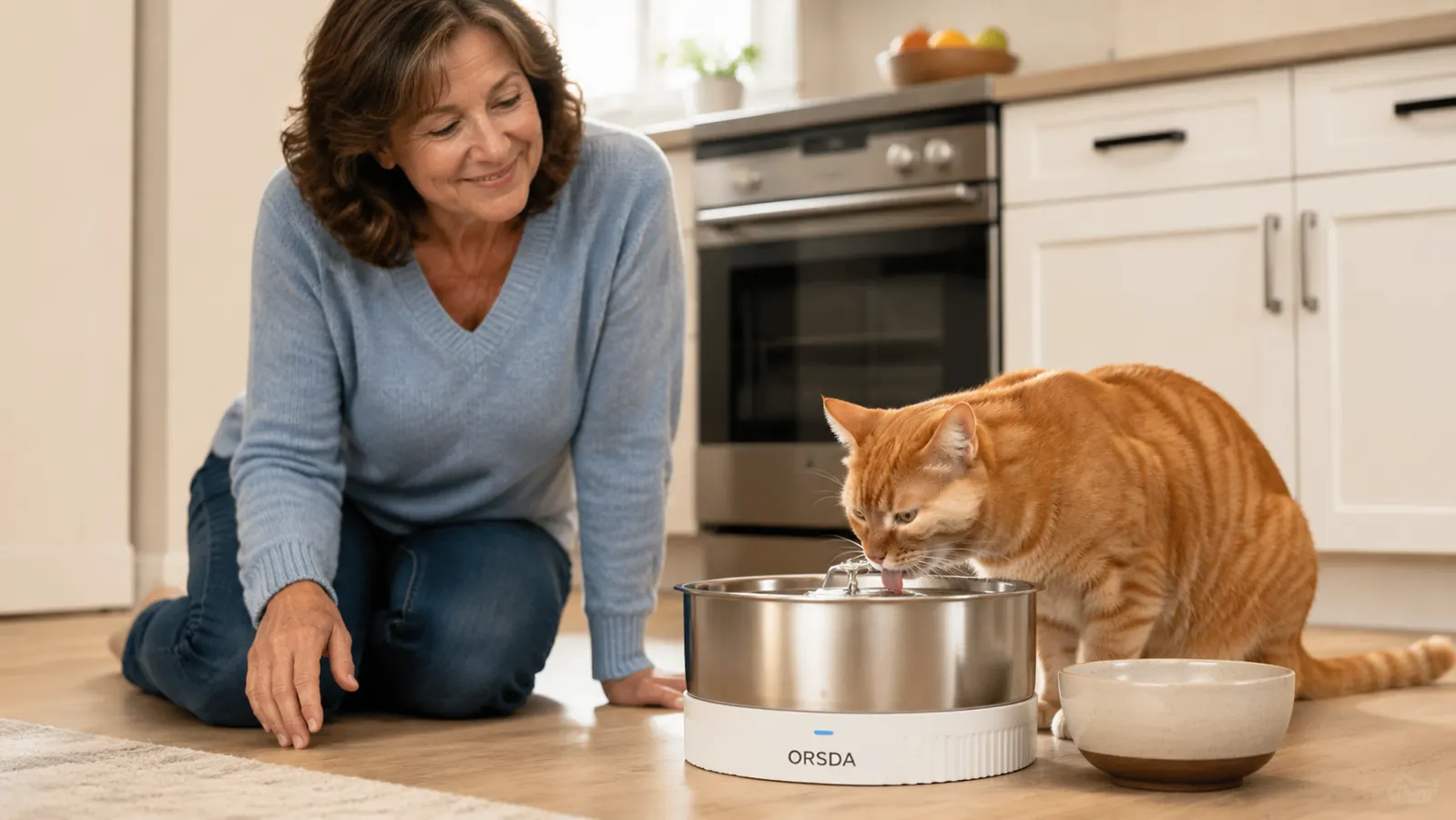
Where the Ceramic Bowl Wins
Cost and simplicity are genuine advantages, not consolation prizes. If your cat drinks readily from whatever water container you put in front of them, a properly maintained ceramic bowl is completely adequate for their health. There is no motor to fail, no replacement filter to order, no power cord to route along the baseboard, and no assembly to mess up. Cats who are already enthusiastic drinkers do not get much from the fountain's behavioral nudge. For those cats, you are better off putting the savings toward better food, a vet visit, or a second litter box.
A ceramic bowl also wins for travel, boarding, and households with pet sitters. Packing a pump-driven fountain with a filter and a power cord is a real logistical hassle compared to dropping a ceramic bowl into a bag. Pet sitters are less likely to monitor a fountain's water level correctly, and a fountain running low is louder and less effective than one that is properly topped off. For short trips and shared-care situations, the bowl removes a layer of variables. Some older cats are also deeply resistant to change, and introducing a humming electric fountain to a 14-year-old cat who has used a bowl her entire life is sometimes more stress than the hydration benefit is worth.
Biscuit went from two reluctant bowl visits a day to six or eight fountain sessions within her first four days. That behavioral shift, driven entirely by moving water, is the core argument for the fountain in a single cat.
The Noise Question Everyone Asks Before Buying
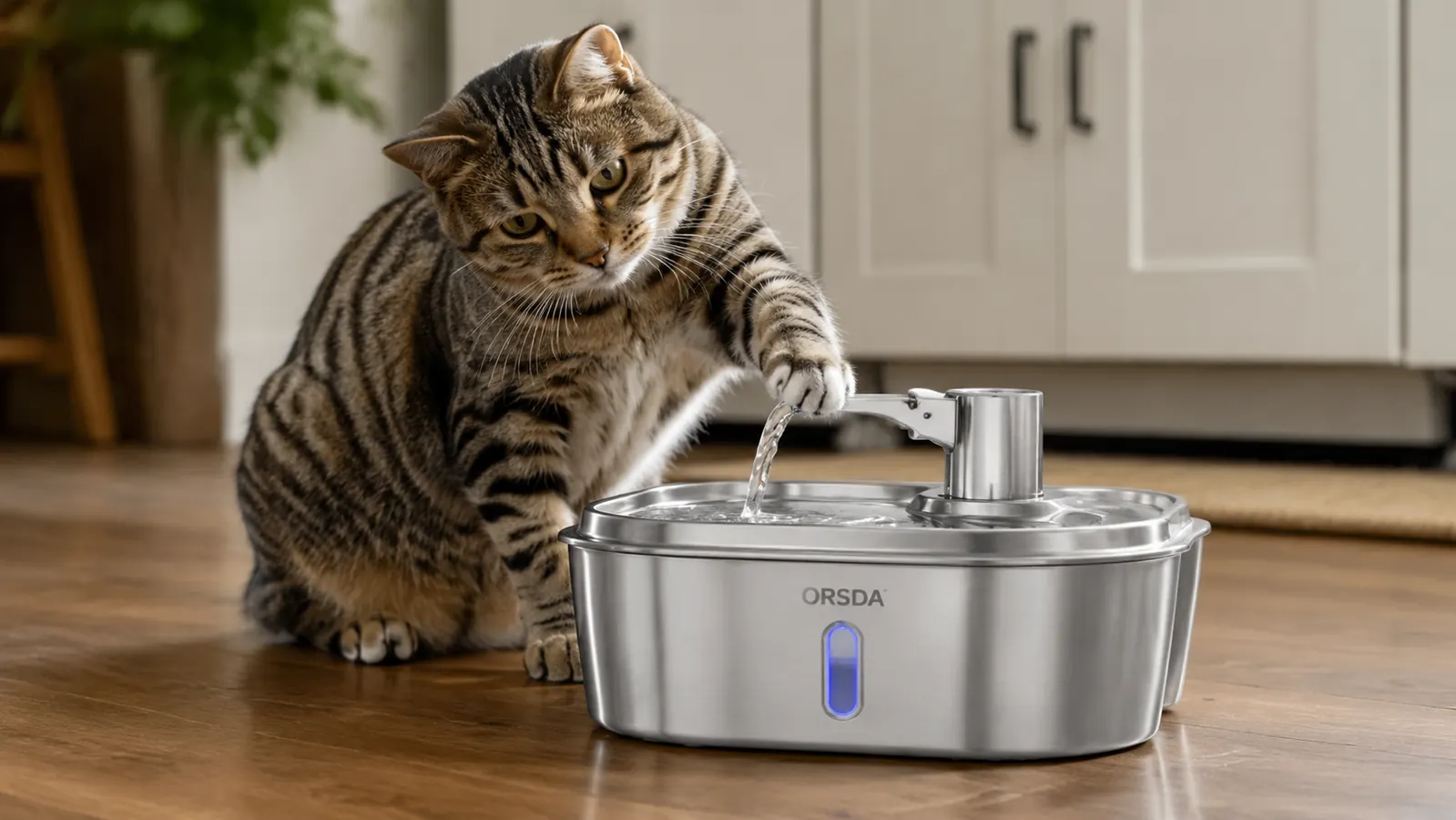
The ORSDA runs under 30 decibels when the reservoir is full, roughly the ambient sound of a quiet room at night. We tested it in a bedroom with a light sleeper and it was genuinely not an issue. The important caveat is that noise increases as the water level drops. When the reservoir falls below about a quarter full, the pump is pulling air along with water and you will hear a higher-pitched whirring that is audible and annoying in a quiet room. The solution is straightforward: keep the fountain topped off, or set a reminder to refill every three to four days. The noise complaints you see scattered through Amazon reviews are almost exclusively a low-water problem, not a motor-quality problem. A properly maintained fountain at full level is quiet enough that most owners forget it is running.
Real Cleaning Comparison, Not the Optimistic Version
People assume the fountain is harder to maintain because it has more parts, and that assumption is worth examining carefully. The ceramic bowl needs a genuine scrub every single day to stay biofilm-free. If you skip a day during summer when the room is warm, you will see and smell the difference. Over the course of a week that is seven scrubbing sessions. The ORSDA fountain needs a full disassembly and rinse roughly once a week, with the stainless bowl and base going straight into the top rack of the dishwasher. The pump impeller benefits from a quick toothbrush pass every two to three weeks to clear mineral deposits, which takes about three minutes. The filter swap happens every two to four weeks depending on your water hardness. When we tracked actual time spent on each option across a month, the fountain took less total hands-on cleaning time than the bowl. The fountain front-loads the complexity into setup and filter ordering; the bowl spreads small maintenance tasks across every single day.
The filter cost is a real ongoing expense and we will not pretend otherwise. Replacement filter packs are affordable for four-packs, and ORSDA-compatible generic versions work well if you do not want to pay brand pricing. Changing every three weeks puts you at a modest annual filter cost. For a product keeping your cat's kidneys out of the vet's exam room, most cat owners find that acceptable. But budget for it, because it is the one hidden cost the fountain has that the bowl genuinely does not.
Who Should Buy Which
Buy the ORSDA fountain if your cat is a reluctant or inconsistent drinker, has ever had a urinary issue, crystals, or any kidney concern flagged by a vet, or if you have caught them drinking from the bathroom faucet or a dripping tap and ignoring the bowl. All of those are behavioral signals that moving water is what they want and that static water is what they have been tolerating. The fountain is also the right call for any cat eating primarily dry kibble, since dry-fed cats depend entirely on their drinking water for hydration and get almost none from food. Multi-cat households benefit from the larger 2L capacity, which handles two cats through a full day without going stale.
Stick with the ceramic bowl if your cat drinks willingly and eagerly from whatever you set down, you travel or board your cat frequently, your cat is elderly and resistant to any routine change, or you genuinely cannot commit to the weekly maintenance the fountain requires. A clean, freshly filled ceramic bowl beats a neglected fountain with a dirty filter in every measurable way. The fountain is only better when it is maintained. If the honest answer is that you are unlikely to keep up with it, the bowl is the more responsible choice for your cat's health.
If your cat has ever had a UTI, kidney concerns, or simply ignores the water bowl, the fountain is the first upgrade worth making.
The ORSDA stainless steel cat water fountain keeps water moving, filtered, and fresher than any static bowl can match. Check the current price and see why over 15,000 cat owners made the switch.
Amazon Check Today's Price on Amazon →