
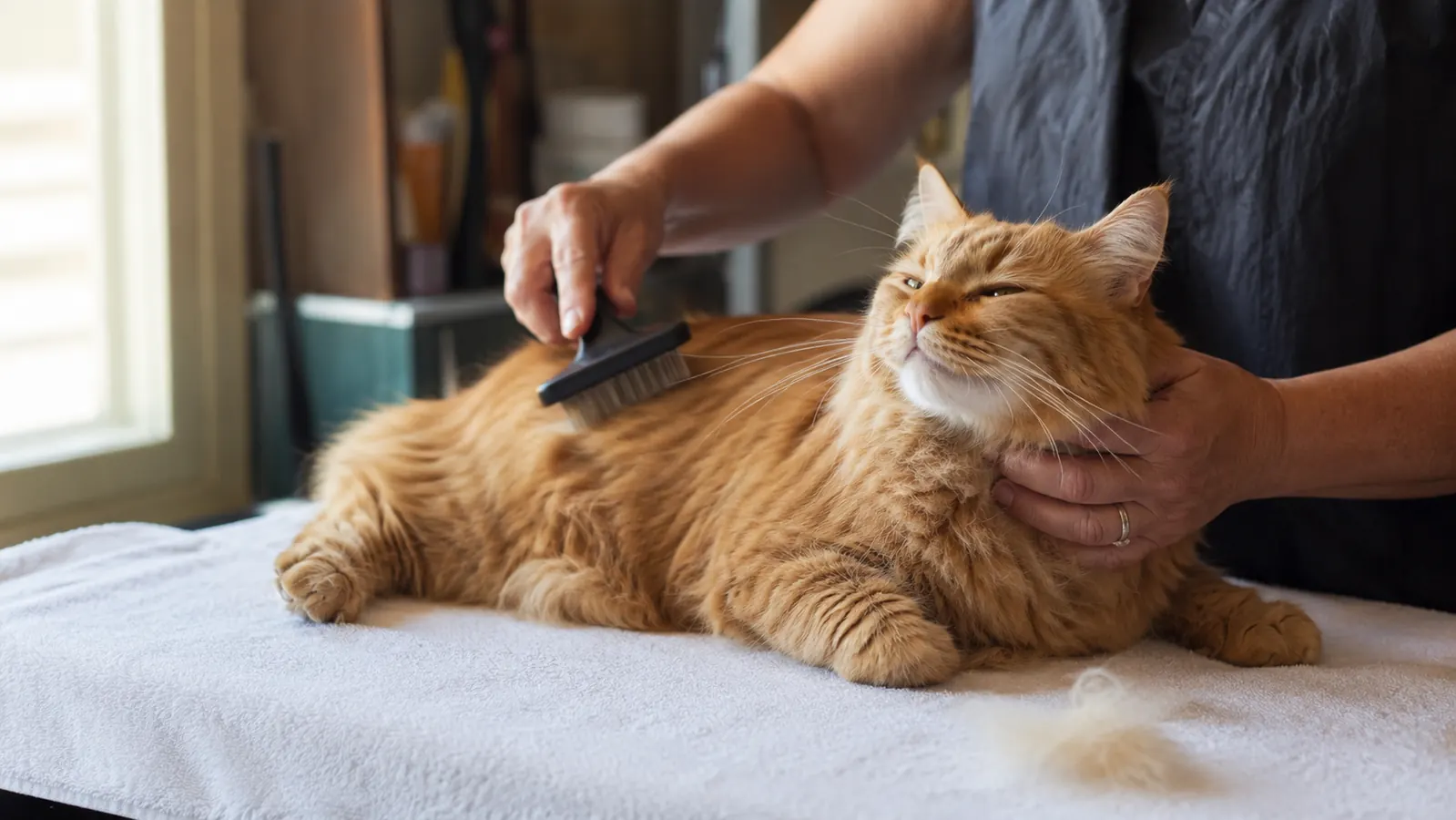
If your cat turns into a blur of claws the second you reach for a brush, you are not dealing with a bad cat. You are dealing with a cat who has never learned that grooming feels good, and possibly one who has been scraped with the wrong tool a few times. We have been there. We have the puncture marks to prove it.
The good news is that deshedding a cat at home is genuinely learnable, even with a cat who currently treats a brush like a threat. The key is a specific five-step sequence that builds tolerance first, then removes loose fur efficiently once the cat is calm. The whole thing takes about 15 minutes once you have the routine down, and the right tool makes the difference between pulling out a marble-sized hairball and a full grocery bag of undercoat. We will walk through both.
Your cat is shedding because that undercoat needs somewhere to go
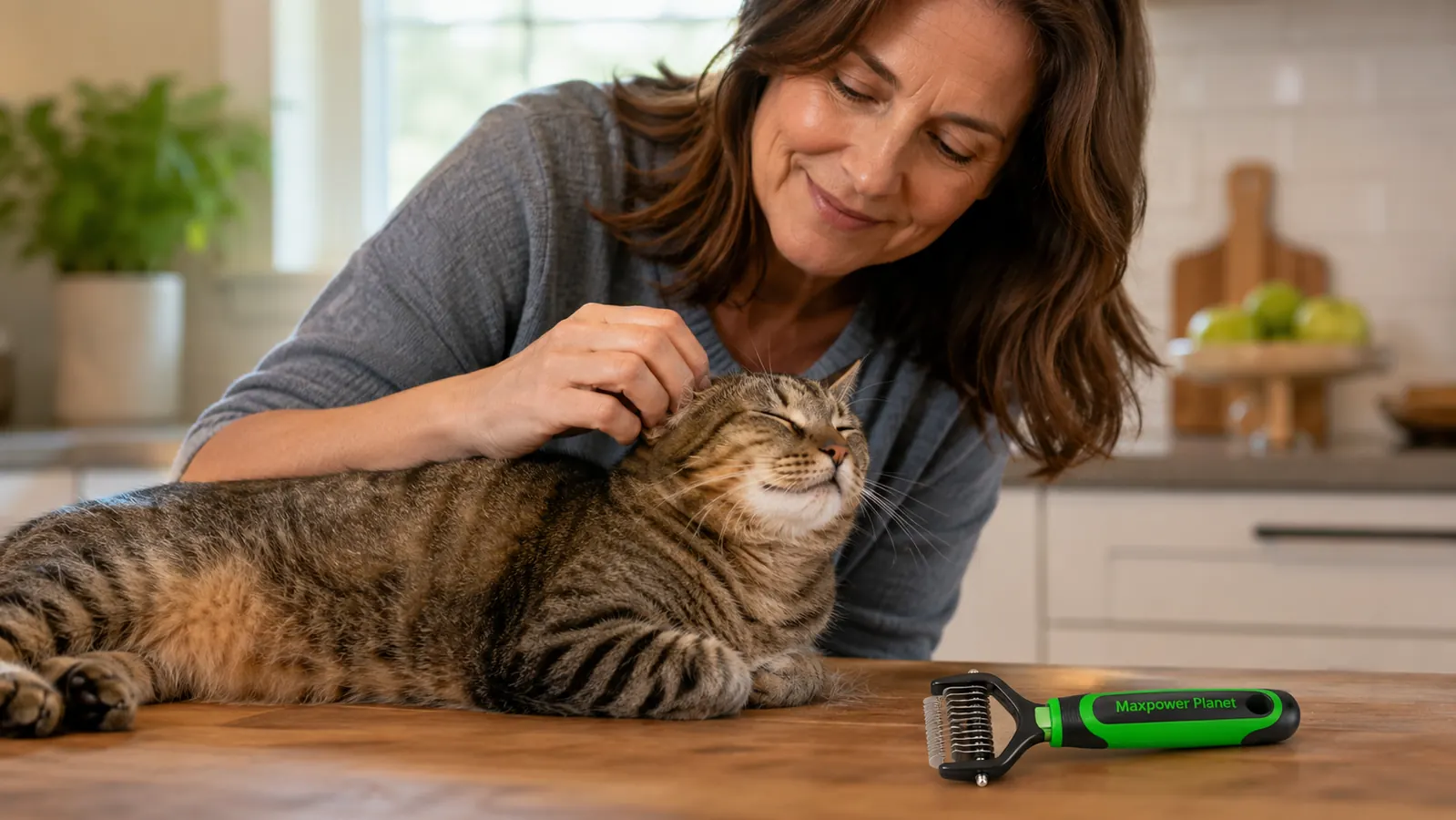
The Maxpower Planet Double-Sided Deshedding Rake has a 9-row wide-tooth side for detangling and a 17-blade narrow side for undercoat removal. It is rated 4.6 stars across 57,867 Amazon reviews and costs less than a single grooming appointment.
Amazon Check Today's Price on Amazon →What Else Helps Before You Even Pick Up a Tool
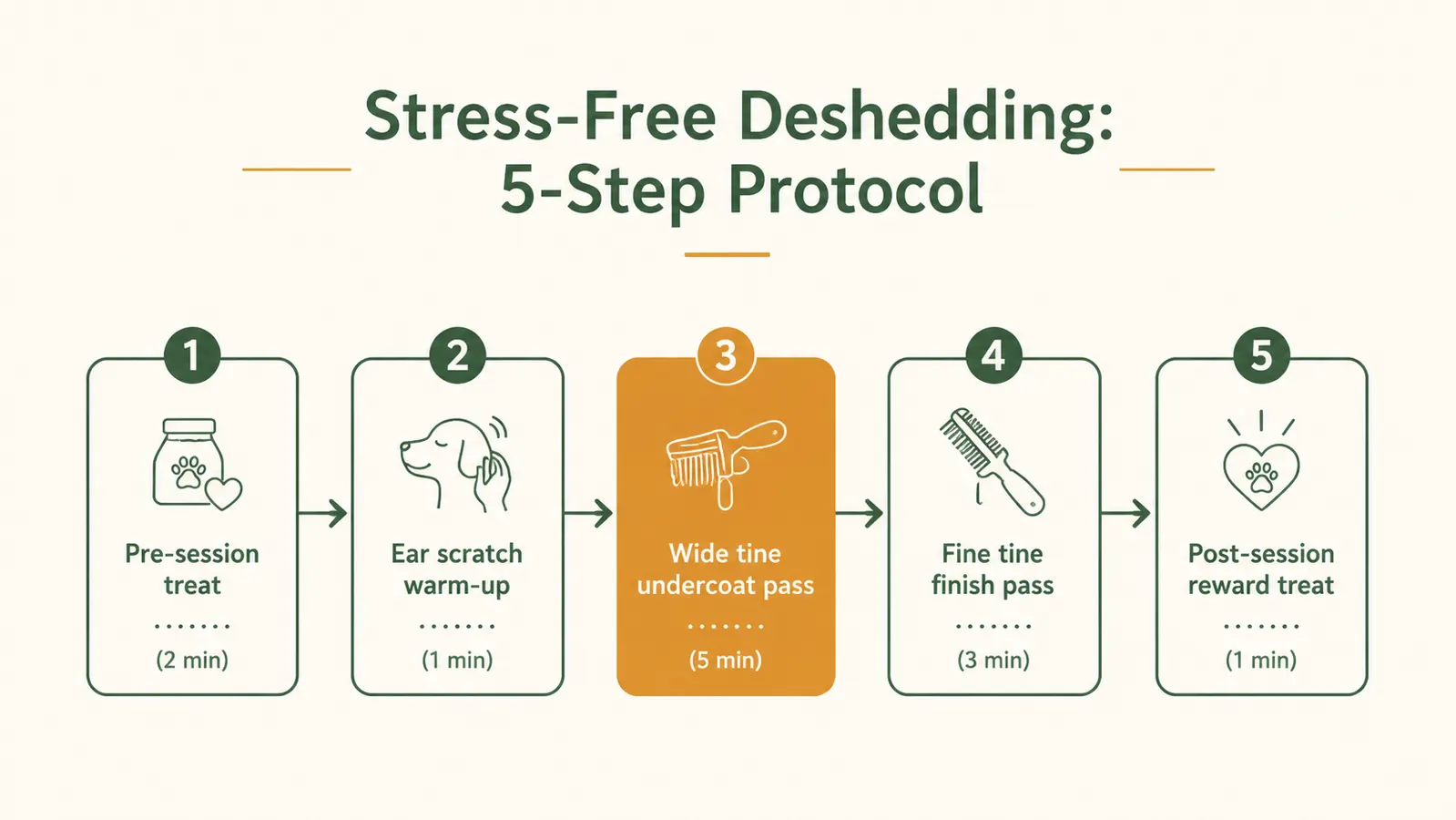
The biggest mistake cat owners make is starting a grooming session cold. You walk in, grab the rake, and go for the back. The cat tenses up, you scrape a knot, and now you have a 20-minute ordeal instead of a 5-minute session. Grooming tolerance is built in the 10 minutes before you ever touch a tool, not during the grooming itself.
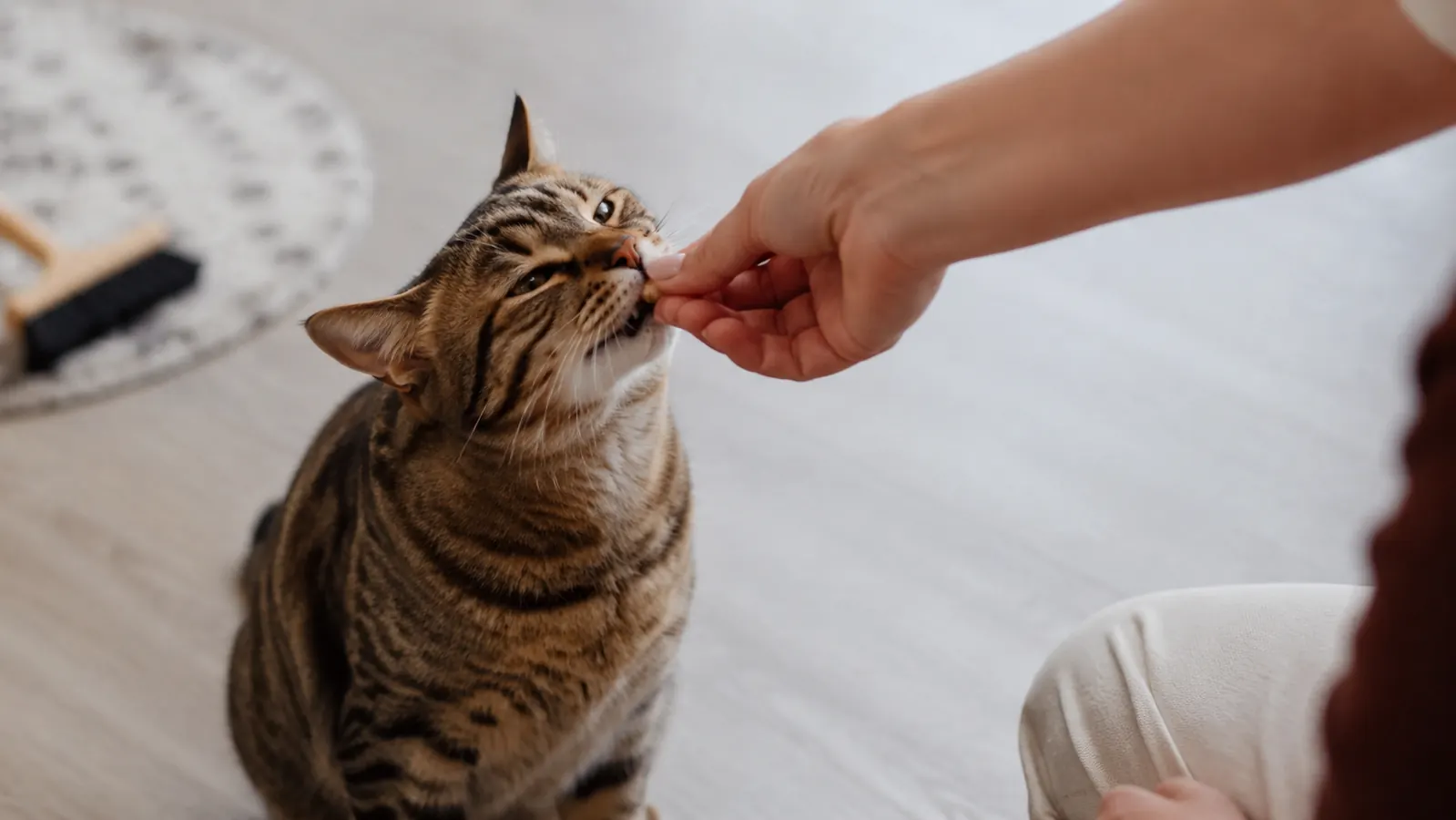
Three things prime the session for success. First, pick a time when the cat is already relaxed, ideally right after a meal when blood sugar is up and the prey drive is quiet. Second, sit at the cat's level on the floor rather than lifting them onto a table, at least in the early weeks. Third, have a high-value treat ready, something they do not get otherwise, for every single positive micro-interaction. The treats are not a bribe. They are a training signal that tells the cat this particular activity predicts something good.
Step 1: Run Your Hands Over the Full Coat Before Any Tool Touches the Fur
Spend two to three minutes doing nothing but petting your cat the way they like best. Neck, chin, base of tail if they enjoy it. You are not searching for mats yet. You are letting the cat confirm that your hands being near them is not a threat. Watch for the slow blink. That is your green light.
While you are petting, you are also gathering information. Note where the coat feels dense and packed (usually the ruff, belly if accessible, haunches, and base of tail). Note any spots where the cat flinches, which signals either a skin sensitivity or a mat forming underneath. You will approach those areas last and with lighter pressure.
For a cat new to grooming, this step is the entire session for the first few days. Do not rush to the tool. Build the association that you-touching-them equals calm and treats, and the rest of the process accelerates dramatically.
Step 2: Start With the Wide-Tooth Side to Release Surface Tangles
Once the cat is relaxed from Step 1, introduce the Maxpower Planet rake using the 9-row wide-tooth side first. This side has more space between the teeth, so it glides through the top coat without catching on knots. Start at the neck and work toward the tail in short, light strokes that follow the direction of fur growth. Never rake against the grain on a first pass.
The wide-tooth side does two things: it separates surface tangles before they become mat-forming knots, and it introduces the physical sensation of the tool against the skin in the gentlest possible way. Most cats who initially resist grooming are reacting to the shock of dense tines hitting a tangle, not to being brushed itself. Starting here removes that first unpleasant jolt.
Work through the back, sides, and neck. Skip the belly for now unless your cat is unusually tolerant. Give a treat every 30 seconds or so. Keep sessions under five minutes at this stage. You are training, not trying to remove every loose hair in one go.
Step 3: Flip to the 17-Blade Side for Actual Undercoat Removal
This is where the real shedding work happens. Flip the Maxpower rake to the narrow 17-blade side and go back over the same areas with the same back-to-tail direction. The blades on this side are designed to cut through the dense inner coat, which is the soft, cottony fur that falls out in clumps and ends up on every surface in your home.
You will know this side is working because the rake will come away looking like it caught a small animal. That is normal and satisfying. Clear the blades after each pass by pulling the collected fur off with your fingers or tapping the rake against a paper bag. A clogged rake drags rather than cuts, and dragging is what causes discomfort.
Use slightly more pressure than you did in Step 2, but still well short of pressing down hard. The weight of your hand is enough for cats under 12 pounds. For larger, heavier-coated cats like Maine Coons or Norwegian Forest Cats, you can add a little more but let the blade geometry do the work, not brute force. If the cat turns to look at you or flicks their tail twice in a row, ease the pressure immediately.
The blades came away looking like they caught a small animal after just two passes. My long-haired tabby, Biscuit, who used to sprint the moment he saw a brush, sat through the whole thing and fell asleep.
Step 4: Address Problem Areas Last With Short, Careful Strokes
Return to the areas you flagged in Step 1: dense patches, the ruff if your cat has a thick collar of fur, and the haunches just above the tail. These spots tend to accumulate the most undercoat and are also most likely to have small mats forming underneath the surface coat.
For a mat that feels like a small hard pebble under the fur, do not try to rake through it directly. Hold the fur between the mat and the skin with two fingers to prevent pulling on the skin, then use the wide-tooth side to tease the edges of the mat apart before switching to the blade side. If the mat is tight against the skin or the cat reacts strongly to you touching it, that one belongs to a groomer or a vet. Trying to force a deep mat out at home risks cutting the skin and will absolutely destroy any trust you have built.
The belly is optional and highly cat-dependent. Some cats flip over and present their belly for grooming once they trust you. Others treat belly touching as a personal insult no matter how calm the session is going. Read your specific cat and do not push it. A cat who tolerates back and flank grooming without stress is already 80 percent of the way there in terms of reducing loose fur in your home.
Step 5: Finish With a Final Smooth-Out Pass and a Warm Reward
Once the heavy undercoat work is done, go back to the wide-tooth side for one slow, smooth pass from neck to tail. This catches any loose fur that got displaced during Step 3 and also signals to the cat that the session is winding down. The change in pressure and stroke length acts as a consistent closing cue, and over time the cat begins to understand this transition, which makes them less likely to bolt mid-session in anticipation of when it will end.
Follow immediately with the best treat you have and, if the cat is a lap cat, three to five minutes of calm petting on their terms. You want the last sensory memory of the session to be positive. Do this consistently and within six to eight sessions the average domestic cat who currently resists grooming will start showing up for it voluntarily, or at least stop hiding when they see the rake come out.
Frequency matters more than session length. A 10-minute deshedding session twice a week removes far more loose fur than one 40-minute session on the weekend. The shorter sessions also never push past the cat's tolerance threshold, which means you preserve the trust you built rather than burning it down every seven days.
What Else Helps Keep Shedding Under Control Between Sessions
Diet plays a larger role in shedding volume than most cat owners expect. A coat that sheds heavily year-round, outside of the normal spring and fall blowout seasons, is often a sign that the diet is low in omega-3 fatty acids. Switching to a food with named fish as the first ingredient, or adding a small amount of wild salmon oil to the bowl once a day, typically reduces chronic shedding noticeably within four to six weeks. It will not stop shedding entirely, because that is biological and normal, but it changes the texture of the coat from dry and brittle (which breaks off as loose fur constantly) to supple and cohesive.
Hydration is the other lever. Cats on dry-food-only diets are often mildly dehydrated, and dehydration shows up in the coat as dullness and excess shedding. If your cat will not drink much from a standing bowl, a recirculating water fountain often increases daily intake because cats are instinctively drawn to moving water. It is a small change that has a measurable coat effect over time.
For the hair that does end up on furniture and clothing in between sessions, a damp rubber glove dragged along upholstery pulls up fur faster than any lint roller. The static charge the rubber creates grabs even the fine undercoat fibers that lint rollers miss. We use one in each room and it takes about 30 seconds to clear a couch cushion.
One tool that handles both detangling and deep undercoat removal
The Maxpower Planet rake has over 57,000 Amazon reviews because it genuinely does both jobs without scratching the skin. If you are buying your first real deshedding tool, this is the one we recommend starting with. At current pricing it costs less than one grooming appointment.
Amazon Check Today's Price on Amazon →